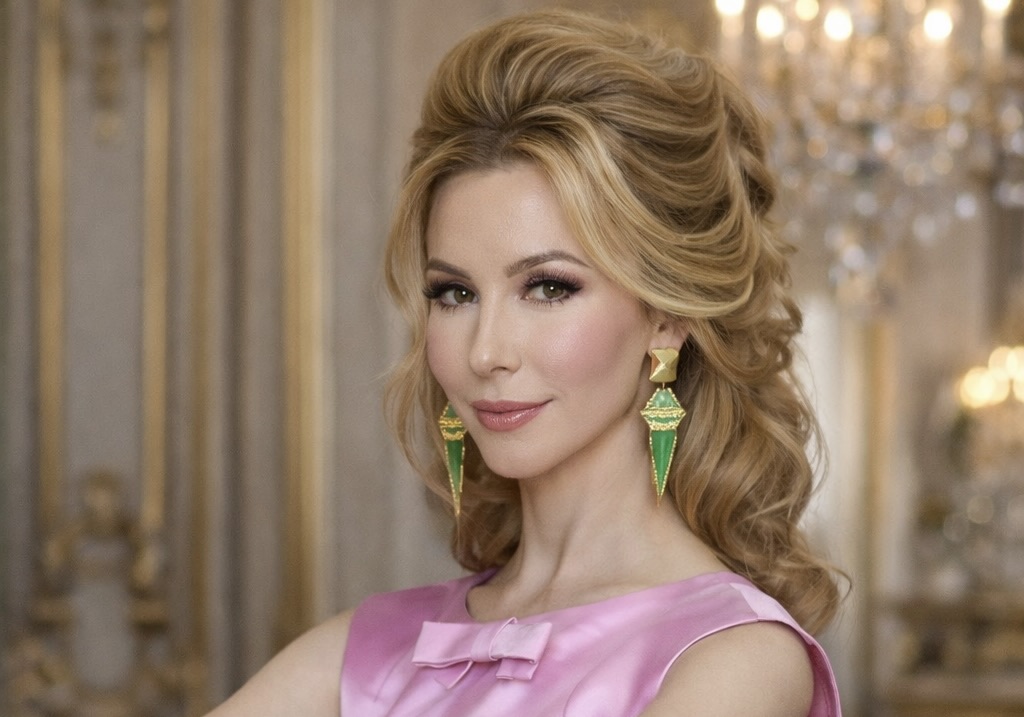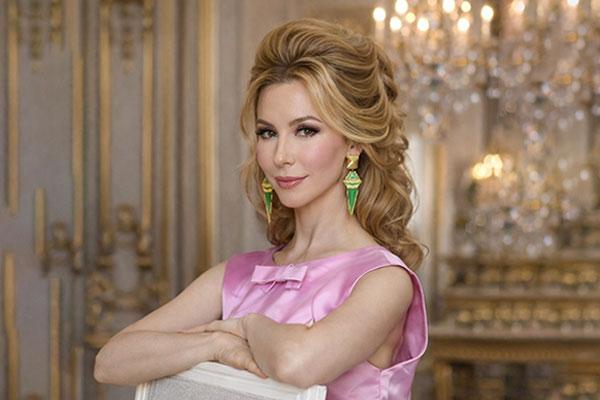
Adriana Mihaela Zarzu
1. Congratulations on your LIT Music Awards achievement! Could you share more about your journey and background in the music industry?
My journey in music has been rooted in both discipline and a clear artistic vision. I am a classical crossover soprano with an extended upper range, and from the beginning, I’ve been intentional about blending classical technique with a more contemporary, emotionally resonant sound.
I’ve had the honor of performing as a soloist at Carnegie Hall and singing alongside Andrea Bocelli, experiences that shaped both my standards and my sense of artistic responsibility. Being part of opera and philharmonic ensembles further grounded me in classical excellence, while my independent work allowed me to develop a distinctive crossover identity.
Beyond the stage, my work has connected with a global audience, with one of my vocal performances reaching over 30 million views. That response reinforced my belief that there is a place for music that combines technical precision with emotional depth.
Receiving recognition from the LIT Music Awards marks a meaningful moment in that journey. For me, it reflects consistency, growth, and an ongoing commitment to refining both my voice and creative direction.
2. How do you see this recognition influencing your future music?
Recognition like this from the LIT Music Awards reinforces the direction I’m already committed to while raising the standard for what I create next. It’s not something that defines my path, but it does sharpen my focus.
Moving forward, I’m even more intentional about developing music that exists at the intersection of classical excellence and modern emotional impact. As a classical crossover soprano, my goal is to create work that not only showcases vocal ability, but also leaves a lasting impression — something that resonates instantly and stays with the listener.
It also pushes me to elevate every aspect of my artistry, from vocal performance to production quality and overall presentation, so that each release feels fully realized and unmistakable in its identity.
Ultimately, this recognition is not a destination for me. It’s a signal to continue building, refining, and expanding my sound on a global scale.
3. What's the moment you first realized music was your calling? Can you describe it?
I don’t think there was a single moment when music suddenly became my calling — it revealed itself over time, though there came a point when it became undeniable.
I remember singing and realizing that it wasn’t just about producing sound; it was about the way music could shift a room, how people would become still, emotional, and fully present. There was a connection happening that went beyond technique or performance. That’s when I understood that my voice carried something beyond notes — it carried impact.
As I continued to train and perform, that feeling only grew stronger. Being on stage, especially in classical settings, made me realize this wasn’t something I wanted to pursue occasionally, but something I was meant to dedicate myself to fully.
For me, music is more than an art form. It’s a responsibility to move people, elevate emotion, and create something lasting. That understanding ultimately confirmed it as my true calling.
4. What's the most unusual source of inspiration you've drawn from while creating your music?
One of the most unusual sources of inspiration for me is silence. In a world that is constantly moving and filled with noise, I’ve found that stepping into stillness allows something much deeper to emerge. Some of my most expressive interpretations have come not from adding more, but from stripping everything back — sitting with the music in a quiet, almost meditative space until the emotion reveals itself naturally.
I’m also deeply inspired by sacred spaces — cathedrals, churches, and environments where sound carries a certain weight and reverence. There’s something about the acoustics and atmosphere that shapes how I approach a phrase, a breath, even a single note. It becomes less about performance and more about presence.
Those influences — silence and space — have taught me that music doesn’t always come from intensity. Sometimes it emerges through restraint, through listening, and through allowing emotion to unfold naturally rather than forcing it.
5. Do you have any quirky rituals or habits when you're composing or recording?
I wouldn’t call them quirks as much as intentional rituals, but I do have a few habits that are essential to my process.
Before recording, I need a moment of complete stillness. I step away from distractions, reset mentally, and focus entirely on the emotional core of what I’m about to sing. It’s important to me that the performance comes from a centered place, not just a technical one.
I’m also very particular about recording sections multiple times — not to perfect them mechanically, but to explore different emotional nuances. Sometimes the difference between two takes is subtle, yet one carries a depth that feels impossible to recreate once discovered.
Another habit is that I never rush a recording session. If something doesn’t feel aligned, I would rather pause and return to it with clarity than force a result. For me, the integrity of the performance always comes before speed.
These rituals allow me to stay connected to both the discipline and emotion behind the music, which remains essential to everything I create.
6. How would you describe your creative process? Is it more of a jazz jam session or a perfectly orchestrated symphony?
My creative process is a balance of both, though it ultimately leans more toward a carefully orchestrated symphony.
There is always an initial phase that feels intuitive and exploratory, where I allow emotion, phrasing, and interpretation to develop naturally. That stage is important because it keeps the performance alive and authentic.
Once that foundation is established, however, I become very precise. Every detail — dynamics, breath placement, tone color, and emotional progression — is refined with intention. As a classical crossover soprano, I believe each piece requires both freedom and structure in order to achieve its fullest impact.
So while the beginning may feel organic, the final result is never accidental. It is carefully shaped, controlled, and refined to deliver a distinct emotional experience.
7. How do you want people to feel or experience when they hear your music?
I want people to feel something genuine and lasting—something that goes beyond simply hearing a voice.
When someone listens to my music, I want them to feel stillness, emotion, and a sense of elevation. Whether it’s peace, strength, or reflection, the experience should feel personal, almost as if the music meets them exactly where they are in that moment.
As a classical crossover soprano, my goal is to create an atmosphere as much as a performance. I want the listener to be fully present—to pause, to feel, and to connect with something deeper than the surface of the sound.
If someone walks away not just remembering how it sounded, but how it made them feel, then I’ve done what I set out to do.
8. What's one risk you took with your music that completely changed your career path?
One of the most defining risks I took was embracing classical crossover as my artistic identity rather than remaining strictly within traditional classical boundaries.
It would have been safer to follow a more conventional path, but I felt strongly that my voice and interpretation belonged in a space capable of reaching a wider and more diverse audience. Choosing that direction meant stepping beyond expectations and building something uniquely my own.
Another part of that risk was sharing my voice more openly on digital platforms. Releasing performances to a global audience requires a certain level of vulnerability, but it also created an opportunity for connection on a much larger scale. One of my vocal performances ultimately reached more than 30 million views as a result of that decision.
That shift changed everything. It expanded my audience, clarified my artistic direction, and reinforced the idea that taking calculated risks can open doors that comfort never will.
9. What's the song or artist that first made you fall in love with music, and why?
First and foremost, I believe my voice is a gift from God, and that belief has always shaped how I approach music — with purpose, gratitude, and responsibility.
Artistically, one of the earliest influences that deeply moved me was Sarah Brightman. There was something about the way she blended classical technique with a more contemporary, ethereal sound that resonated with me immediately. It wasn’t just her voice — it was the atmosphere she created, the emotion she conveyed, and the sense of transcendence within her performances.
That influence stayed with me and helped shape my own path as a classical crossover soprano, where I strive to combine vocal precision with a deeply immersive emotional experience. Her work didn’t just inspire me to sing — it helped me understand the kind of artist I wanted to become.
10. What's one moment in your career that you consider a turning point, and how did it shape your journey?
One of the most defining turning points in my career was performing as a soloist at Carnegie Hall.
Standing on that stage carried a level of responsibility and clarity that changed how I viewed myself as an artist. It wasn’t just about delivering a performance — it was about meeting a certain standard and understanding that I belonged in spaces of that caliber.
That experience shifted something internally. It raised the expectations I set for myself and solidified the level I continue striving toward, not occasionally, but consistently.
From that moment forward, I became even more intentional in how I approach my music — how I prepare, how I present myself, and how I shape my artistic identity. It wasn’t just a milestone; it was a confirmation of direction.
11. If you could describe your award-winning work in a single sentence, what would it be?
A voice where classical precision meets undeniable emotional force — designed not just to be heard, but to leave a lasting imprint.
12. What was the most challenging part of creating this piece, and how did you push through?
The most challenging part was honoring both the technical and emotional demands of Dvořák’s “La Luna.”
This piece requires a high level of vocal control, particularly in maintaining purity of tone and consistent phrasing, while also carrying a deep sense of longing and intimacy. It’s not enough to sing it accurately — the emotion must feel genuine and sustained throughout the performance.
What helped me overcome that challenge was slowing the process down and allowing the interpretation to fully develop. I revisited the phrasing, focused on breath control, and explored the emotional weight behind each line until it felt natural rather than imposed.
In the end, it became less about performing the piece and more about inhabiting it — allowing technical precision and emotional depth to exist in complete balance.
13. What upcoming music project or album are you currently working on, or is there a new genre or style you’ve yet to explore but are eager to try?
I’m currently developing a body of work that further defines my identity as a classical crossover soprano, with a strong focus on blending classical repertoire with cinematic and contemporary influences.
The direction I’m exploring is highly intentional — music that maintains vocal integrity while expanding its emotional and sonic reach. I’m especially drawn to cinematic elements that make the music feel immersive and expansive, not just vocally expressive.
At the same time, I’m interested in continuing to explore inspirational and faith-based repertoire, as it aligns deeply with who I am as an artist and allows me to create work that carries both emotional and spiritual resonance.
This next phase is centered on refinement and expansion — creating music that feels distinctive, elevated, and globally resonant.
14. If you could collaborate with any artist, past or present, who would it be, and what would the vibe of your track together be?
I would love to collaborate with artists like Andrea Bocelli, Sarah Brightman, or Mario Lanza — each represents a distinct level of vocal presence and emotional impact that aligns closely with my own artistic direction.
With Andrea Bocelli, I envision a powerful cinematic duet — something expansive and emotionally resonant, where both voices carry depth and intensity while remaining refined.
With Sarah Brightman, the collaboration would lean toward a more ethereal and atmospheric sound — layered, expressive, and immersive, blending classical technique with a contemporary, almost otherworldly quality.
With Mario Lanza, the approach would be rooted in a more traditional operatic style — rich, dramatic, and vocally driven, honoring the strength and clarity of classical performance.
Each of these collaborations reflects a different dimension of my artistry, yet all share the same foundation: vocal excellence, emotional depth, and a timeless quality.
15. How would you inspire fellow musicians to participate in music awards, and what valuable advice would you share to guide their journey?
I would encourage musicians to see awards not as validation, but as opportunities for growth, exposure, and refinement.
Participating in competitions like the LIT Music Awards pushes you to present your work at a higher level — to be intentional not only about your performance, but also about how your artistry is shaped, recorded, and presented. That process alone is valuable, regardless of the outcome.
My advice would be to focus on excellence in every detail. It’s not just about vocal or instrumental ability — it’s about the complete presentation: the quality of the recording, the emotional connection, and the clarity of your artistic identity.
At the same time, it’s important to stay grounded in who you are as an artist. Recognition is meaningful, but it should never define your direction. What truly matters is consistency, discipline, and the commitment to continue evolving.
When approached with that mindset, awards become part of your journey — not the measure of it.