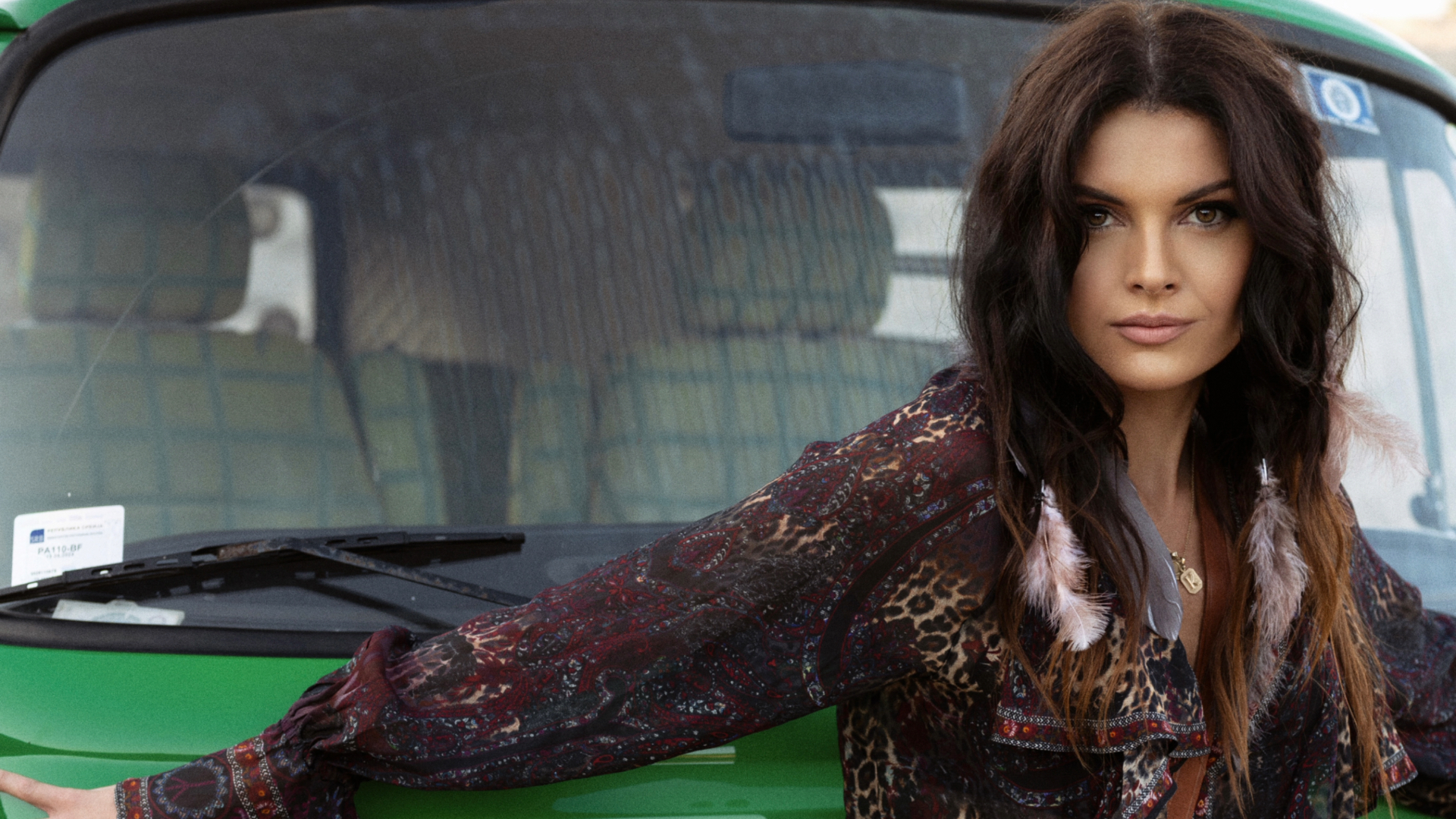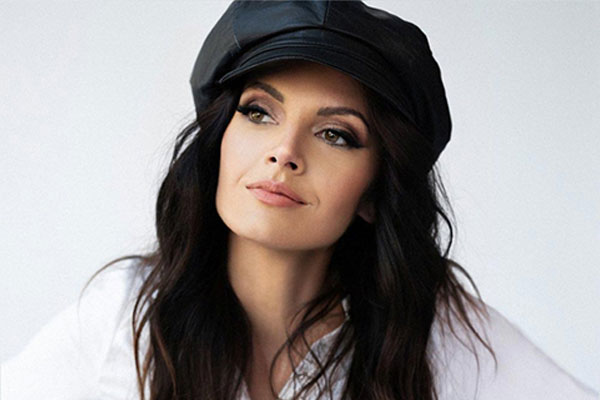
Kristina Marinova
1. Congratulations on your LIT Music Awards achievement! Could you share more about your journey and background in the music industry?
Thank you so much! I’m incredibly honored to receive this recognition from the LIT Music Awards. It means the world to me!
Music has been the love of my life for as long as I can remember. I was classically trained as a pianist from a very young age, and that foundation gave me not only technical discipline but also the emotional language to express myself fully through sound. Over the years, I’ve had the opportunity to perform around the world — as both a soloist and a collaborator. Each experience has deepened my connection to music even further.
No matter the style or setting, I’m always searching for that spark — the moment when music transcends technique and becomes pure energy and feeling. That’s what drives me. The Bus Came By And I Got On was a labor of love in every sense, allowing me to bring together my passion for classical performance with my admiration for the Grateful Dead’s improvisational spirit and emotional storytelling.
I truly can’t imagine life without music — it’s how I breathe, communicate, process the world, and share my soul with others.
2. How do you see this recognition influencing your future music?
It is an honor that I hope will help bring my music to a wider audience. More than anything, I want people from all backgrounds — whether they come from the classical world, the jam band scene, or somewhere entirely different — to feel welcomed in the soundscapes I create.
I’m really excited about the idea of working with other artists who share a passion for genre-crossing music. Whether they are instrumentalists, vocalists, or even visual artists, I think there is so much potential in collaborating, combining perspectives, and creating something that speaks to people on a deeper level.
This recognition is a beautiful reminder of why I make music in the first place — to connect, to inspire, and to keep reaching for something that brings us all a little closer together.
3. What's the moment you first realized music was your calling? Can you describe it?
Music has been a part of my life for as long as I can remember. My family took me to concerts and festivals as early as age three, and those experiences filled me with awe and inspiration. I was captivated by the power of the piano and the incredible artistry of legendary pianists like Sviatoslav Richter and Vladimir Horowitz.
From a young age, I dreamed of being on stage like them — not just to perform, but to create a deep connection with the audience through music. Those early moments planted the seed for my lifelong passion, and I knew that music was my true calling. For me, the stage and the piano became a place where I could express myself fully and share my soul with others.
4. What's the most unusual source of inspiration you've drawn from while creating your music?
I’ve always been inspired by the different sounds around me — especially the sounds of nature. I love listening to the rustle of leaves, the songs of birds, and even the subtle movements of trees. I truly believe nature communicates in its own language, and I find a lot of beauty and mystery in that. I’m especially fascinated by how trees communicate with one another — it’s such a quiet, powerful kind of connection.
One of my favorite inspirations is the dance of the wind among the leaves — the way it moves, shifts, and creates rhythms and textures that feel alive. These natural sounds often spark ideas in my mind and influence the way I shape melodies, rhythms, and dynamics in my music.
For me, listening deeply to the world around me opens up a whole new dimension of creativity that goes far beyond traditional musical sources. But honestly, I can find inspiration just about anywhere — even in something as simple as staring at a wall.
5. Do you have any quirky rituals or habits when you're composing or recording?
Yes, I definitely have a few personal rituals. Before I compose or record, I light incense — something earthy like sandalwood or patchouli. It helps me clear the space and get into a more focused, meditative state. I think of it as setting an intention, creating a kind of sanctuary around the piano.
For me, it’s about entering the right state. The Grateful Dead were all about that — being present, open, and ready for the unexpected. In a way, these rituals help me “tune in” before I play a single note.
I love reading about the band — not just their concerts and music-making, but their lives, philosophy, and creative process. It’s more than inspiration; it’s a way of connecting deeply with their spirit. I try to channel that freedom and emotional honesty in every arrangement. This project isn’t just about reinterpreting their songs — it’s about honoring the way they lived through their music.
6. How would you describe your creative process? Is it more of a jazz jam session or a perfectly orchestrated symphony?
Definitely more like a symphony than a jam session. It is meticulous and structured, and I take things step by step. It’s a necessary process to achieve true freedom. It’s like constructing a house — you start from the ground up.
For this project, I listened to many different live recordings of each song, often from different concerts and different years, to understand how the Grateful Dead’s compositional and interpretive styles evolved over time. Their music is so fluid and alive, and I wanted to absorb as much of that as possible before committing anything to paper.
Once I had a sense of the emotional and musical core of each piece, I began creating the arrangements — working out the rhythms, harmonies, and melodic flow to translate everything for solo piano. Then came the writing… and a lot of rewriting. Some of the songs I rewrote seven times before they finally felt right.
It’s a process that requires patience and precision, but I love it. It feels like crafting a living sculpture out of sound.
7. How do you want people to feel or experience when they hear your music?
I want listeners to feel more than just sound when they hear my music. I want them to experience a true connection to the emotion and spirit within each piece.
The Grateful Dead’s music has this transformative power — a feeling that it connects us to something greater than ourselves and to the universe around us. I try to channel that same energy in my interpretations, so the music becomes a space where listeners can feel open, vulnerable, and deeply present.
Ultimately, my hope is that people walk away from the experience feeling touched, connected, and maybe even a little changed.
8. What's one risk you took with your music that completely changed your career path?
One of the biggest risks I took was stepping outside the traditional classical repertoire and reimagining the music of the Grateful Dead — a band known for their improvisation and rock ethos — through solo classical piano. It was uncharted territory for me, blending genres in a way that many might have seen as unconventional or risky.
But embracing that challenge opened an entirely new creative world and audience. It reshaped how I think about music, performance, and the boundaries between genres, and ultimately changed my career path by allowing me to explore deeper emotional and spiritual connections in my work.
9. What's the song or artist that first made you fall in love with music, and why?
The first artist who truly made me fall in love with music was Vladimir Horowitz, when I heard him playing Scriabin.
His energy, command of the instrument, commitment, and the deep connection he had with the keyboard were mesmerizing. When Horowitz performed, it felt like nothing else in the world existed. His stage presence was completely captivating, transporting you into another realm.
That profound intensity and devotion to music sparked my own passion and shaped the way I approach the piano.
10. What's one moment in your career that you consider a turning point, and how did it shape your journey?
A true turning point for me was choosing to focus on recording while still honoring my roots as a performer — fully stepping into the path of a recording artist without leaving the stage behind. Up until then, I had been performing often, but releasing my music into the world in a permanent form, as recordings that live beyond the moment, was something I had never really explored.
I discovered how much I genuinely enjoy the recording process — paying attention to detail, the creative shaping of the music, and collaborating with a team. It opened up an entirely new world for me.
That decision has connected me with a larger community of artists and collaborators, and it has shaped the path I am on now.
11. If you could describe your award-winning work in a single sentence, what would it be?
The Bus Came By And I Got On is a musical journey where the timeless spirit of the Grateful Dead is reimagined through the intimate language of the piano, in a delicate dance of freedom, memory, and reflection.
12. What was the most challenging part of creating this piece, and how did you push through?
The most challenging part of creating The Bus Came By And I Got On was capturing the intricate rhythms, harmonies, and spontaneous spirit of the Grateful Dead’s music on a single instrument. Their sound is so rich and layered, with multiple instruments weaving together in conversation, which made translating that depth into solo piano arrangements a truly demanding task.
To push through, I immersed myself in countless live recordings from 1966 to 1972, listening closely to understand the nuances of their performances. It was a process of careful transcription, reimagining, and rewriting, where I had to balance technical precision with emotional connection. I needed to honor the freedom and energy of the originals while crafting something new and personal.
It was challenging, but also deeply rewarding. This kind of commitment and dedication to the music allowed me to bridge classical and rock worlds, creating an album that feels both authentic and fresh.
13. What upcoming music project or album are you currently working on, or is there a new genre or style you’ve yet to explore but are eager to try?
Right now, I’m touring and diving deeper into the Grateful Dead’s music from the 1973 to 1977 period, expanding on the work I started with The Bus Came By And I Got On. Since the album focused on 1966 to 1972, I’m excited to explore and release piano interpretations of the later period. I’m also working on a few classical projects that allow me to continue exploring the traditional repertoire I love.
Beyond that, I’m always open to new musical journeys.
14. If you could collaborate with any artist, past or present, who would it be, and what would the vibe of your track together be?
If I could collaborate with anyone, it would be Jerry Garcia. It would be a blend of soulful, improvisational guitar and expressive piano in a dialogue full of emotion and spontaneity.
15. How would you inspire fellow musicians to participate in music awards, and what valuable advice would you share to guide their journey?
I’d tell fellow musicians that music awards are a wonderful opportunity to share your art with a wider community. I’d encourage them to connect with others who love and celebrate the dedication that goes into making music.
My advice is to stay true to your beliefs, soul, voice, and passion. Prepare your best work, believe in yourself, and approach the experience with an open mind and heart. Most importantly, focus on growing, learning, and embracing the journey.
Remember, the music you create and the connections you make along the way are the greatest rewards of all.